On this page
- What it treats
- What it feels like
- Dry needling vs. acupuncture
- Safety and who should skip it
- How it fits your plan
- Questions
Not sure it's for you?
Book a regular evaluation. If dry needling is the right tool, we'll add it. It is never required to get better here.
What it treats
Trigger points show up in almost every stubborn musculoskeletal problem. Dry needling is most useful for:
- Neck and upper trap tension, and the headaches that come from it
- Low back pain with tight glutes, hip flexors, or quadratus lumborum
- Shoulder pain where the rotator cuff and surrounding muscles are guarding
- Tennis elbow and forearm pain
- Hip and glute tightness that limits rotation, especially in golfers
- Calf and Achilles tightness in runners and pickleball players
- Plantar fasciitis
- Chronic tension that returns no matter how much you stretch
What it feels like
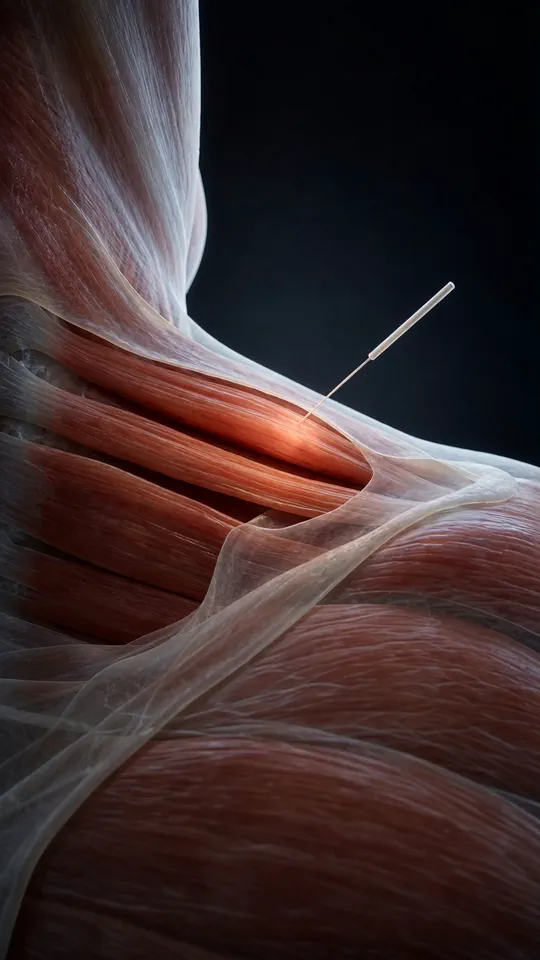
The needle itself is barely felt going in. When it reaches the trigger point, the muscle twitches, which feels like a brief cramp or deep ache. That lasts a few seconds and is the sign we're in the right spot. Most people say it's far less than they braced for. Afterward the area feels looser and heavier, and the next day is like the day after a hard workout. That fades in a day or two.
Dry needling vs. acupuncture
They share a needle and nothing else. Acupuncture is a traditional Chinese medicine practice based on meridians and energy flow. Dry needling is a Western technique targeting specific trigger points found on physical exam, performed by a physical therapist inside a full treatment plan, with the goal of restoring how a muscle works so you can load it. It is the anatomy and the intent that make it different.
Safety, and who should skip it
Needles are sterile and single-use, the skin is cleaned, and I'm trained in the anatomy that matters, including the areas around the lungs and major vessels. Mild soreness and occasional small bruising are the expected side effects. Serious complications are rare when done by a certified provider.
We'll talk first, and I'll use another approach, if you:
- Have a needle phobia or have fainted with needles before
- Have a bleeding disorder or take blood thinners
- Are in the first trimester of pregnancy
- Have an active infection or skin condition at the site
- Have a compromised immune system or lymphedema in the area
How it fits your plan
Dry needling opens a window: the muscle stops guarding and moves the way it should. What we put through that window, the strength and movement work in the same session and the days after, is what makes the change permanent. Most people notice a difference after one session and use two to four sessions, a week apart, for a stubborn problem. It's a tool inside your plan, not the plan itself.